

Fish Feed Market Size US$196.2 Bn by 2033 Driven by Aquaculture Growth Demand
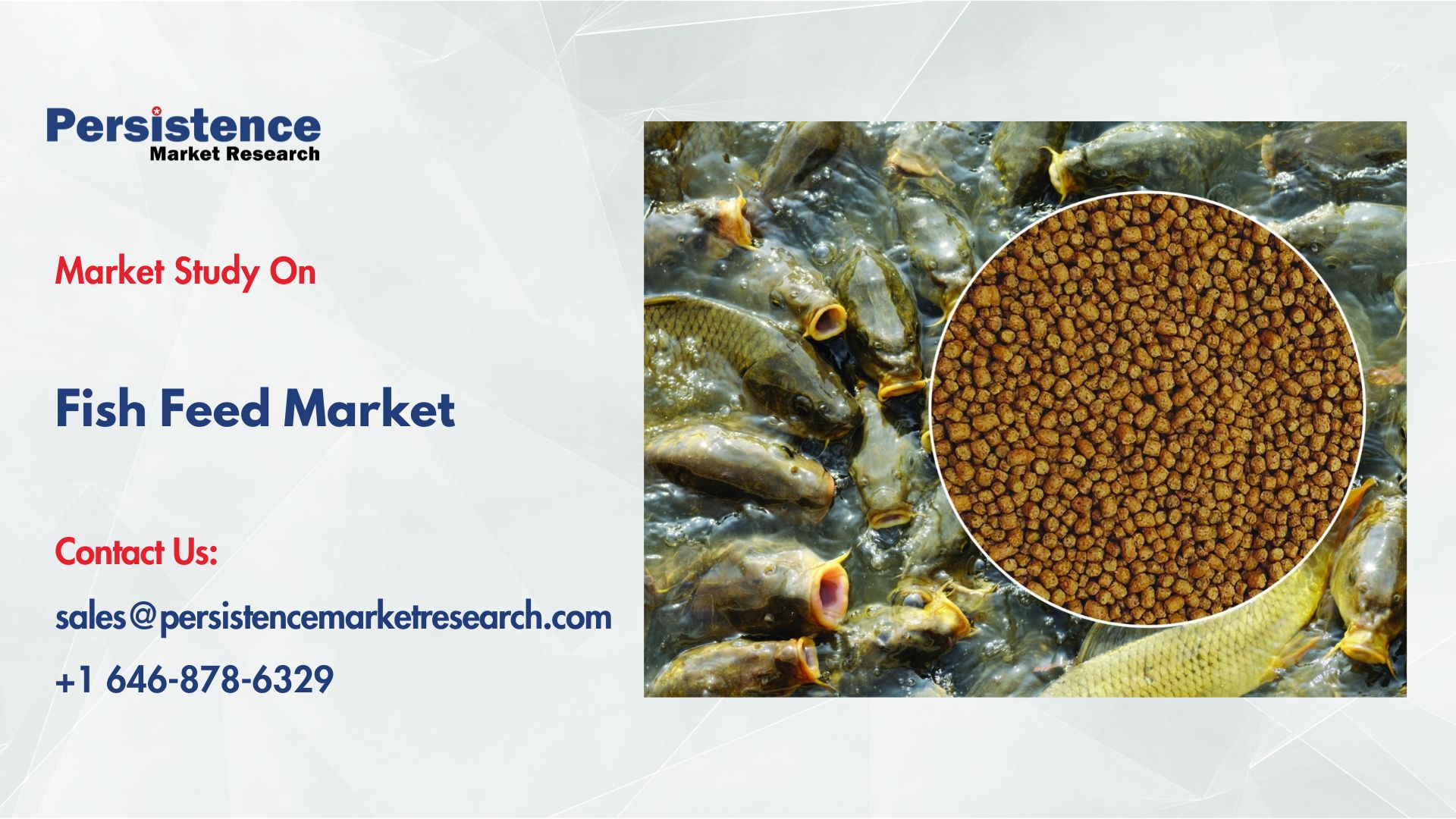
The global fish feed market is set to grow from US$147.1 billion in 2026 to US$196.2 billion by 2033, driven by aquaculture growth and advanced feed formulation
BRENTFORD, ENGLAND, UNITED KINGDOM, February 3, 2026 /EINPresswire.com/ -- The global fish feed market is poised for sustained growth over the coming years, driven by the rapid expansion of the aquaculture industry and rising global demand for seafood as a primary source of animal protein. According to current industry assessments, the global fish feed market is projected to grow from US$ 147.1 billion in 2026 to US$ 196.2 billion by 2033, registering a compound annual growth rate (CAGR) of 4.2% during the forecast period from 2026 to 2033. This steady growth trajectory reflects the market’s critical role in supporting global food security and the long-term development of sustainable aquaculture systems.
Fish feed is a foundational input in aquaculture production, directly influencing growth rates, feed conversion efficiency, fish health, and overall yield. As capture fisheries approach biological limits and face regulatory constraints, aquaculture has emerged as the fastest-growing source of seafood worldwide. This structural shift is significantly boosting demand for nutritionally optimized, cost-effective, and environmentally sustainable fish feed products. The increasing commercialization of aquaculture, particularly in emerging economies, is further reinforcing market expansion.
Key factors driving growth in the global fish feed market include rising per capita seafood consumption, increasing awareness of the nutritional benefits of fish, and the expansion of intensive and semi-intensive aquaculture farming practices. In addition, technological advancements in feed formulation, the development of alternative protein ingredients, and improvements in feed efficiency are enabling producers to achieve higher output while reducing environmental impact. Supportive government policies, investments in aquaculture infrastructure, and growing private sector participation are also contributing to the positive outlook for the fish feed industry.
Get Your FREE Sample Report Instantly – Click Now: https://www.persistencemarketresearch.com/samples/33883
Segmentation Analysis
By Product Type
• Plant Based
• Fish & Fish Products
• Microorganism
By Form
• Pellet
• Granules
• Flakes
• Sticks
• Powder
By Application
• Commercial
• Household
By Distribution Channel
• B2B
• B2C
Need Tailored Insights? Request Customization Now: https://www.persistencemarketresearch.com/request-customization/33883
Regional Insights
The global fish feed market demonstrates strong regional variation, closely aligned with aquaculture production volumes, species diversity, and levels of technological adoption.
Asia Pacific dominates the global fish feed market and accounts for the largest share of both volume and value. The region’s leadership is driven by extensive aquaculture activities in countries such as China, India, Vietnam, Indonesia, and Thailand. China alone represents a substantial portion of global aquaculture output, creating consistent and large-scale demand for fish feed. Rapid population growth, rising disposable incomes, and strong cultural preferences for fish as a dietary staple are further supporting regional market growth.
Europe represents a mature yet technologically advanced market, with strong demand for high-performance and sustainable fish feed products. The region’s focus on salmon and trout farming, combined with stringent environmental regulations, is driving innovation in feed formulation and ingredient sourcing. European feed producers are increasingly investing in alternative proteins, such as insect meal and algae, to reduce reliance on marine-based ingredients.
North America continues to experience steady growth, supported by increasing investments in land-based aquaculture systems and recirculating aquaculture systems (RAS). These systems require highly specialized feeds designed to optimize water quality and fish health, contributing to higher per-unit feed value.
Latin America is emerging as one of the fastest-growing regions in the fish feed market, driven by the expansion of tilapia, shrimp, and salmon farming in countries such as Brazil, Chile, and Ecuador. Favorable climatic conditions, export-oriented production, and growing private investment are strengthening the region’s market position. The Middle East and Africa are also witnessing accelerating growth, supported by government-led food security initiatives and increasing adoption of aquaculture as a means to reduce reliance on seafood imports.
Unique Features and Innovations in the Market
Modern fish feed solutions are increasingly differentiated by innovation in formulation, ingredient sourcing, and digital integration. Feed manufacturers are focusing on improving feed efficiency, reducing environmental impact, and enhancing fish health through functional ingredients such as probiotics, prebiotics, enzymes, and immunostimulants.
Technologies such as artificial intelligence and data analytics are being integrated into feed development and farm management practices. AI-driven modeling tools are helping optimize nutrient formulations based on species, life stage, and farming conditions, while IoT-enabled feeding systems allow real-time monitoring and adjustment of feeding regimes. These innovations are enabling farmers to reduce feed waste, lower production costs, and improve overall sustainability.
Market Highlights
The adoption of advanced fish feed solutions is being driven by the need to improve productivity, profitability, and environmental performance in aquaculture operations. Feed represents one of the largest cost components in fish farming, making efficiency gains a critical priority for producers. High-quality formulated feeds help improve growth rates, reduce mortality, and enhance product quality, directly impacting farm economics.
Regulatory frameworks promoting sustainable aquaculture practices are playing an increasingly important role in shaping market dynamics. Governments and international organizations are encouraging the use of environmentally responsible feeds to minimize nutrient pollution and protect aquatic ecosystems. Sustainability certifications and traceability requirements are becoming key considerations for feed manufacturers and aquaculture producers alike.
Secure Your Full Report – Proceed to Checkout: https://www.persistencemarketresearch.com/checkout/33883
Key Players and Competitive Landscape
The global fish feed market is highly competitive, with the presence of multinational corporations, regional feed manufacturers, and specialized aquafeed companies. Leading players are focusing on innovation, capacity expansion, and strategic partnerships to strengthen their market positions.
Companies such as Cargill Incorporated leverage global supply chains, extensive R&D capabilities, and a broad product portfolio to serve diverse aquaculture segments. Skretting, a leading aquafeed brand, emphasizes precision nutrition and sustainability-driven innovation to support high-performance farming systems. BioMar Group focuses on advanced feed formulations and alternative ingredients to meet evolving environmental and regulatory requirements.
Future Opportunities and Growth Prospects
The future outlook for the global fish feed market remains highly positive, supported by long-term growth in aquaculture production and ongoing innovation across the value chain. Emerging technologies, evolving regulatory frameworks, and increasing emphasis on sustainability are expected to shape market strategies and competitive differentiation.
Explore the Latest Trending Research Reports:
Saccharin Market Opportunities
Europe Texturized Vegetable Protein Market Opportunities
Aishwarya Doiphode
Persistence Market Research
+1 646-878-6329
email us here
Visit us on social media:
LinkedIn
Instagram
YouTube
X
Legal Disclaimer:
EIN Presswire provides this news content "as is" without warranty of any kind. We do not accept any responsibility or liability for the accuracy, content, images, videos, licenses, completeness, legality, or reliability of the information contained in this article. If you have any complaints or copyright issues related to this article, kindly contact the author above.
